 English
 Pусский
 Español
If you are considering investing in a commercial indoor playground or expanding an existing family entertainment center (FEC), the first question is likely: Is the market growing, and in which direction?
The short answer is yes—the global indoor playground and family entertainment center market is experiencing steady to strong growth through 2025 and beyond. Multiple industry reports indicate that the FEC market was valued between USD 26.5 billion and USD 32.6 billion in 2025, with projected compound annual growth rates ranging from 6.75% to over 10% through the early 2030s. However, growth is not uniform across all segments. The most significant opportunities lie in venues that combine multiple activity types, prioritize safety and hygiene, and offer themed, immersive experiences that keep families coming back.
This article provides a data-informed overview of the indoor playground market in 2025—covering market size, key growth drivers, emerging design trends, and practical considerations for commercial investors. Whether you are a mall developer, a school administrator, or an entrepreneur planning your first FEC, this guide will help you understand the landscape before you review specific equipment configurations.
Understanding the 2025 Market Landscape
Global Market Size and Growth Projections
The family entertainment center market encompasses a wide range of indoor venues, including indoor playgrounds, trampoline parks, arcades, VR zones, and multi-activity centers. While different research firms use varying definitions and methodologies, the consensus points to a market that is expanding at a healthy clip.
| Metric | Value | Source |
|---|---|---|
| Global FEC market value (2025) | USD 26.5B – 32.6B | 6Wresearch / Mordor Intelligence |
| Projected FEC market value (2031–2034) | USD 47.9B – 79.3B | Multiple sources |
| CAGR (2025–2031/2034) | 6.75% – 10.1% | Industry reports |
| Indoor play equipment market (2025) | ~USD 3.04B | Market Research |
Note: Market figures vary by report scope and definitions. These estimates should be used as directional indicators rather than precise forecasts.
The Asia-Pacific region is forecast to grow at the fastest rate, with an estimated CAGR of 8.36% through 2031, driven by rising disposable incomes, urbanization, and a growing middle class seeking recreational activities for families. North America and Europe remain large, mature markets, but growth is increasingly coming from emerging economies where indoor entertainment options are still under-penetrated.
What's Driving the Growth?
Several interconnected factors are fueling demand for indoor playgrounds and FECs in 2025:
Shift from Goods to Experiences
Consumers—particularly millennial and Gen Z parents—are prioritizing experiences over material goods. Family outings to indoor play venues are seen as valuable shared experiences rather than discretionary expenses. This cultural shift has made FECs a preferred destination for weekend activities, birthday parties, and school group events.
(https://youtu.be/CfHOWVqcia8?si=OTE_c0-g3ofPmlBd)
Year-Round, Weather-Proof Entertainment
Unlike outdoor playgrounds, indoor facilities offer reliable entertainment regardless of weather conditions. In regions with extreme summers, cold winters, or rainy seasons, indoor playgrounds provide a consistent destination for families. This weather-proof nature is a key selling point for mall operators and property developers.
Rising Safety and Hygiene Awareness
Post-pandemic, parents are more conscious of cleanliness and safety standards in public play spaces. Venues that can demonstrate compliance with international safety standards and maintain high hygiene protocols have a competitive advantage. This has also driven demand for equipment made from durable, easy-to-clean materials.
Demand for Multi-Activity Venues
Single-activity play areas are giving way to hybrid venues that combine multiple attractions—slides, ball pits, trampolines, climbing walls, ninja courses, and even digital interactive elements. Operators are recognizing that variety drives longer dwell times and higher per-visit spending.
Urbanization and Mall Evolution
As shopping malls evolve from pure retail destinations to lifestyle and entertainment hubs, indoor playgrounds have become essential anchor attractions. Developers are allocating more floor space to family entertainment to drive foot traffic and increase dwell time.
2025 Design Trends Shaping the Indoor Playground Industry
Themed Environments Are No Longer Optional
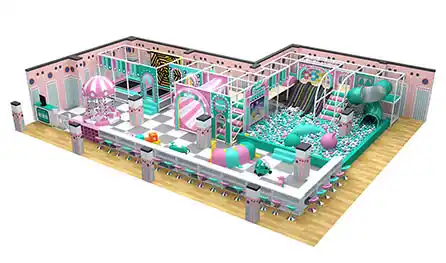
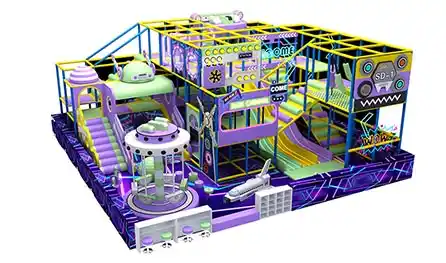
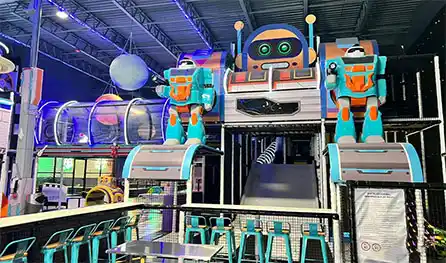
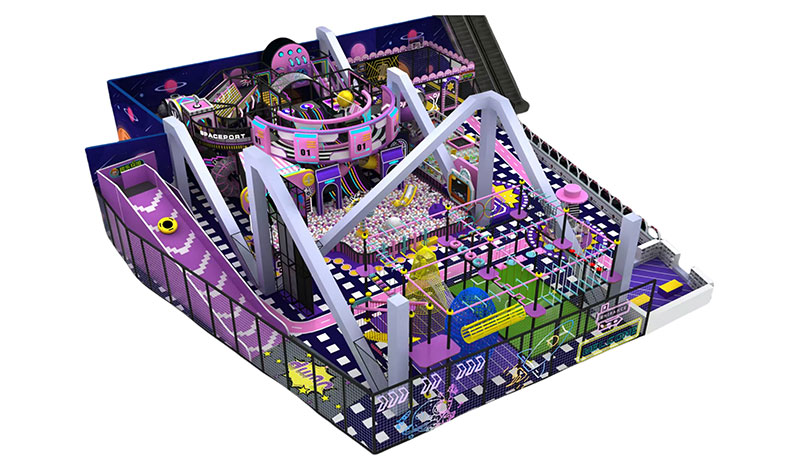
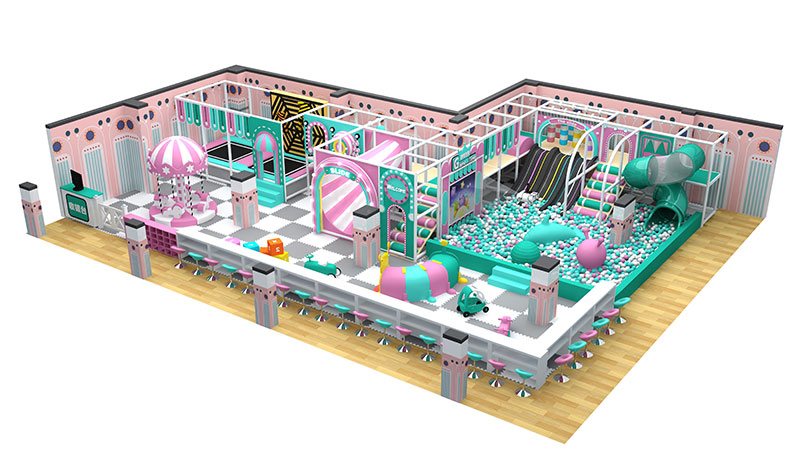
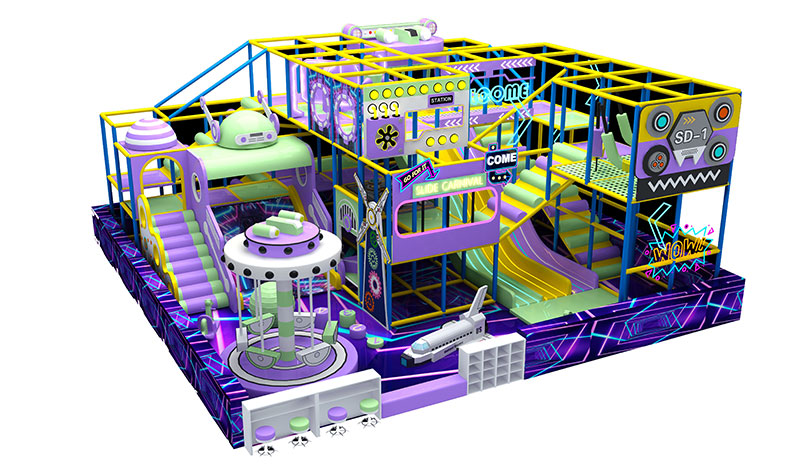
Generic, unbranded play structures are increasingly losing ground to themed environments that tell a story. Popular themes in 2025 include space exploration, jungle adventures, candy kingdoms, ocean worlds, mini cities, and circus fantasies. These themes do more than look appealing—they create immersive experiences that encourage longer play sessions, repeat visits, and organic social media sharing by parents.
A well-executed theme can differentiate a venue in a crowded market. For commercial investors, the choice of theme should align with the local demographic, available space, and broader brand positioning of the venue.
Multi-Zone Layouts for Diverse Age Groups
Modern indoor playgrounds are designed with distinct zones for different age groups. Toddlers (2–5 years) require softer, lower-height structures with gentle slopes, while older children (6–12 years) seek more challenging elements like climbing walls, obstacle courses, and higher slides. Some venues also incorporate dedicated areas for teenagers and adults, such as trampoline courts and ninja courses, broadening the customer base beyond families with young children.
Integration of Physical and Digital Play
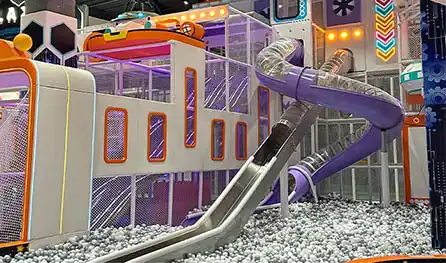
Interactive technology is becoming a standard feature rather than a novelty. Projection mapping, interactive ball walls, LED slides, and augmented reality elements are being integrated into physical play structures. These additions appeal to tech-savvy children and provide parents with visible evidence of developmental benefits—hand-eye coordination, problem-solving, and collaborative play.
Material and Safety Innovations
Safety remains the non-negotiable foundation of any indoor playground investment. In 2025, buyers are increasingly scrutinizing material specifications:
- Steel frames should use hot-dip galvanized pipes to prevent rust and corrosion over years of use
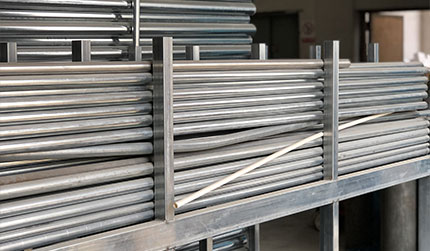
- Platforms should be high-strength steel to eliminate rotting and collapse risks
- Plastic components should use commercial-grade materials such as LLDPE
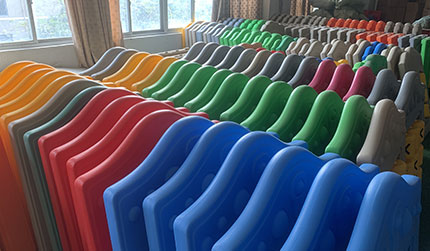
- Padding and surfacing should meet impact attenuation standards under EN and ASTM
Buyers should request clear material specifications in contracts and, where possible, conduct on-site inspections or request sample testing.
Investment Considerations for Commercial Indoor Playgrounds
Cost Factors
The cost of an indoor playground varies widely based on size, theme complexity, equipment types, and customization level. Industry practice suggests that budgets typically range from under USD 40,000 for small soft-play setups to over USD 500,000 for large, multi-zone FECs. Key cost drivers include:
- Floor area
- Theme complexity
- Equipment mix
- Shipping and installation
Because every project is unique, accurate cost estimation requires a detailed site assessment and equipment specification.
Expected Lifespan and Maintenance
Commercial indoor playgrounds typically last between 6 and 12 years, depending on maintenance levels and usage frequency. High-quality materials and regular inspections can extend this lifespan significantly. Maintenance considerations include:
- Routine cleaning of soft play surfaces and ball pits
- Inspection of structural connections and fasteners
- Replacement of worn padding and worn components
- Compliance checks against evolving safety standards
Operators should factor ongoing maintenance costs into their business plans and choose equipment that is designed for low maintenance without compromising safety.
Regulatory Compliance
Equipment must meet the safety standards applicable in the target market. Common standards include:
- ASTM (United States)
- EN (Europe)
- CSA (Canada)
- AS (Australia)
- NZS (New Zealand)
Buyers should verify that their supplier can provide certification documentation and, ideally, has a track record of exporting to regions with these requirements.
Checklist: Key Questions Before Investing in an Indoor Playground
For investors evaluating potential suppliers and project scopes, the following checklist can help structure the decision process:
- What is the available floor area, and what is the ceiling height?
- What age groups will the playground serve?
- What theme or design concept aligns with the target demographic?
- Does the supplier offer 3D design services to visualize the space before production?
- What safety certifications does the equipment hold (ASTM, EN, etc.)?
- What materials are used for the frame, platforms, and soft play elements?
- What is the expected lead time from design to delivery?
- Does the supplier provide installation support or DIY guidance?
- What after-sales support and warranty are included?
- Has the supplier completed similar projects in the target region?
Answering these questions early can prevent costly surprises during the project execution phase.
Frequently Asked Questions
Is the indoor playground market still growing in 2025?
Yes. Multiple industry reports project the global family entertainment center market to grow at a CAGR of 6.75% to over 10% through the early 2030s, driven by experiential消费 trends, urbanization, and demand for year-round family activities.
What size indoor playground is most profitable?
Profitability depends on location, operating costs, and local demand rather than size alone. Smaller venues (100–300 sqm) can be profitable in high-traffic locations with lower rent, while larger venues (500+ sqm) benefit from economies of scale and broader activity offerings.
How long does it take to build a commercial indoor playground?
From design to installation, typical timelines range from 8 to 16 weeks, depending on customization level, production queue, and shipping distance. Custom-themed projects generally require longer lead times.
What are the most popular indoor playground themes in 2025?
Space exploration, jungle adventure, candy kingdom, ocean world, mini city, and circus themes are among the most requested. The choice should reflect local preferences and the overall brand of the venue.
Do I need to meet different safety standards for different countries?
Yes. Equipment must comply with the standards applicable in the installation country—ASTM for the US, EN for Europe, CSA for Canada, AS for Australia, and NZS for New Zealand. Reputable suppliers will confirm compliance with the relevant standards.
Can indoor playground equipment be customized to fit irregular spaces?
Yes. Most commercial suppliers offer custom design services to maximize usable space, regardless of layout irregularities. CAD drawings and 3D renderings are typically provided during the design phase.
Conclusion
The indoor playground and family entertainment center market in 2025 presents a compelling opportunity for commercial investors, property developers, and educational institutions alike. Growth is being driven by enduring consumer trends—experiential spending, safety-conscious parenting, and the demand for weather-proof, multi-activity venues.
However, success depends on more than market timing. The most profitable venues are those that combine thoughtful theme design, age-appropriate activity zoning, rigorous safety compliance, and durable material selection. Before committing to a project, investors should thoroughly evaluate their space, budget, target demographic, and supplier capabilities.
For those ready to move from market research to project planning, reviewing available equipment configurations and discussing specific requirements with an experienced supplier is the logical next step. Explore the range of commercial indoor playground options to understand what is possible within your space and budget.