 English
 Pусский
 Español
If you are an indoor playground operator or an investor planning a new family entertainment center (FEC), you have likely heard about augmented reality (AR) technology. The question is: Is AR just a passing novelty, or is it a genuine game-changer for the industry?
The answer, based on current industry trends and market data, is that AR is becoming a significant differentiator for modern indoor playgrounds. The global indoor entertainment center market was valued at approximately USD 51.29 billion in 2024 and is projected to reach USD 140.48 billion by 2035, growing at a compound annual growth rate of 9.6%. Within this expanding market, AR and VR gaming zones are emerging as one of the fastest-growing segments. This growth is driven by consumer demand for immersive, interactive experiences that go beyond traditional physical play equipment.
This article provides a practical overview of AR in indoor playgrounds—what it is, how it is being used, what benefits it offers to operators, and what you should consider before incorporating AR into your venue. Whether you are exploring a new build or upgrading an existing facility, this guide will help you understand the landscape before you review specific equipment configurations.
What Is Augmented Reality (AR) in the Context of Indoor Play?
Augmented reality differs from virtual reality (VR) in a fundamental way: VR replaces your real-world surroundings with a completely digital environment, while AR layers digital content—such as images, animations, or game elements—over your real-world surroundings.
In an indoor playground context, this means children can still see and interact with the physical play structure—slides, climbing frames, ball pits—while simultaneously experiencing digital overlays that respond to their movements. For example, a standard slide can be transformed into a rocket ship descent, or a climbing frame can become a pirate ship adventure. AR does not require children to wear bulky headsets; many AR applications in playgrounds use projection mapping, motion sensors, or tablets to create the interactive experience.
Types of AR Applications in Indoor Playgrounds
AR technology can be integrated into indoor playgrounds in several distinct ways. Understanding these categories can help operators decide which applications best fit their space, budget, and target audience.
| AR Application Type | Description | Typical Age Group | Key Benefit |
|---|---|---|---|
| Interactive Projection Floors & Walls | Projection mapping transforms floors and walls into interactive game surfaces. Children's movements trigger responses—splashes, musical notes, or game points | 3–12 years | High engagement, low maintenance, no wearables required |
| AR Sandboxes | Real sand combined with a depth camera and projector creates interactive landscapes—volcanoes, oceans, or dinosaur worlds | 3–10 years | Educational (STEAM), collaborative play, immersive |
| AR Scavenger Hunts | Children use tablets or AR goggles to find hidden virtual objects within the physical play space | 5–12 years | Encourages exploration, combines physical activity with problem-solving |
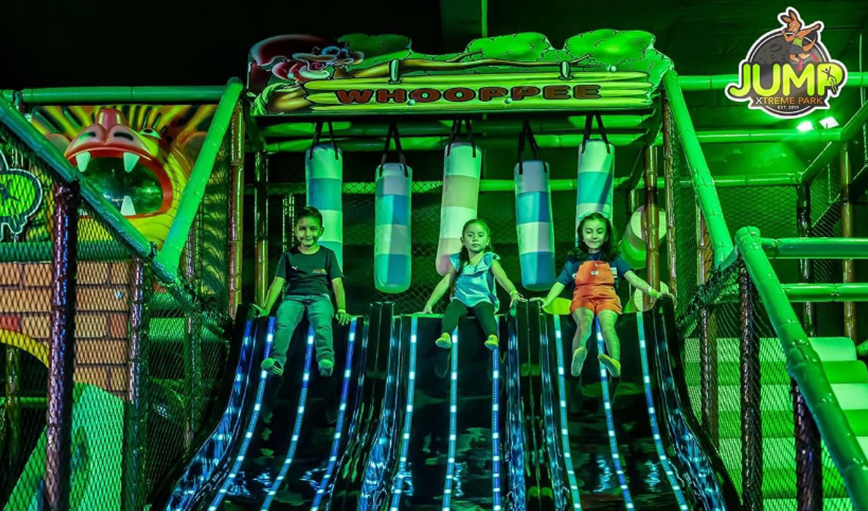
| Interactive Slides & Climbing Walls | Projection or sensor technology adds digital elements to slides and climbing structures, triggering animations or sound effects | 3–12 years | Enhances traditional equipment, increases repeat play |
| Mixed-Reality Multiplayer Arenas | Headset-free AR arenas where multiple players interact simultaneously in active games | 6–adult | High throughput, intergenerational appeal, social play |
For operators seeking to understand how these AR applications can be combined with specific equipment configurations and customization options, consulting with an experienced supplier is an essential next step.
Why AR Matters for Indoor Playground Operators
Extended Dwell Time and Repeat Visits
One of the most compelling arguments for incorporating AR into an indoor playground is its impact on visitor engagement. Traditional physical play structures, while essential, can become predictable after repeated visits. AR introduces variety and novelty without requiring physical reconfiguration of the space. Industry observations suggest that interactive digital elements can extend playtime significantly. When children can return to the same physical structure and experience different digital overlays or game challenges, the perceived value of each visit increases.
Broadened Demographic Appeal
Modern FECs are no longer designed exclusively for young children. AR applications can appeal to a wider age range—from toddlers interacting with projection floors to teenagers and adults participating in mixed-reality arena games. This intergenerational appeal can help venues capture a larger share of family outings, where parents and grandparents are increasingly looking for activities they can enjoy alongside children.
Educational Value
AR technology enables what the industry calls "edutainment"—the integration of educational content into entertainment experiences. AR sandboxes can teach geography and earth science concepts. Scavenger hunts can incorporate language, math, or nature-themed challenges. For venues serving schools, early learning centers, or family-oriented demographics, this educational dimension can be a significant differentiator and a justification for premium pricing.
Competitive Differentiation
As the indoor entertainment market becomes more crowded, differentiation is critical. AR technology provides a visible, tangible point of difference that can be marketed effectively through social media and word-of-mouth. Venues that successfully integrate AR create shareable moments—parents filming their children interacting with digital overlays—that serve as organic marketing content.
What to Consider Before Investing in AR for Your Indoor Playground
Space and Layout Requirements
AR applications have different spatial requirements. Projection floors and walls need adequate ceiling height and clear floor space free from obstructions. AR sandboxes require dedicated table or floor space with controlled lighting conditions. Before committing to any AR solution, confirm that your existing or planned layout can accommodate the technology without compromising the core physical play areas.
Integration with Physical Play Structures
The most effective AR implementations do not replace physical play—they enhance it. Consider how AR elements can be layered onto existing structures. For example, an interactive projection can be added to a ball pit area, or an AR scavenger hunt can be designed to guide children through the entire playground, encouraging exploration of all zones. The goal is seamless integration, not technology for technology's sake. Reviewing themed indoor play structures can help identify which physical elements are best suited for AR enhancement.
Maintenance and Durability Considerations
Commercial indoor playgrounds experience high traffic and rigorous use. AR equipment—projectors, sensors, cameras—must be positioned to avoid damage from active play. Enclosures or protective housings may be necessary. Additionally, the technology should be designed for easy maintenance, with simple recalibration or reset procedures that do not require specialized technical staff on-site at all times.
Content Refresh and Variety
AR experiences rely on digital content. To maintain novelty and encourage repeat visits, operators should consider how frequently the content can be updated or rotated. Some AR systems allow operators to change games, themes, or difficulty levels without replacing hardware, providing ongoing value from a single investment.
Budget and ROI Expectations
AR technology represents an additional investment beyond the core physical play equipment. Costs vary significantly based on the type and scale of the application. Operators should evaluate AR not as a cost center but as a value-add that can justify premium admission pricing, increase dwell time, and drive repeat visitation. As with any capital investment, the business case should be evaluated based on the specific venue's demographics, competitive landscape, and pricing strategy.
Checklist: Questions to Ask Before Adding AR to Your Indoor Playground
- What is the available space and ceiling height for AR installation?
- What age groups will the AR experience serve?
- Does the AR system require wearables or is it headset-free?
- How durable is the equipment for commercial, high-traffic use?
- Can the digital content be updated or rotated to maintain novelty?
- What are the ongoing maintenance and calibration requirements?
- Does the AR system integrate with existing physical play structures?
- What is the total cost of ownership?
- Has the supplier installed similar AR systems in commercial venues?
- What training and support are provided for staff?
Answering these questions before making a decision can help avoid common pitfalls and ensure that the AR investment delivers the expected returns.
Frequently Asked Questions
What is the difference between AR and VR in indoor playgrounds?
AR layers digital content over the real world—children can still see and interact with physical play structures while digital elements respond to their movements. VR replaces the real world entirely with a digital environment, typically requiring headsets. AR is generally more practical for indoor playgrounds because it does not require children to wear headsets and allows them to remain physically active in the play space.
Do children need to wear special equipment for AR playground experiences?
Not necessarily. Many AR applications in indoor playgrounds use projection mapping and motion sensors that do not require any wearables. Some applications, such as AR scavenger hunts, may use tablets or handheld devices, but headset-free AR is increasingly common in commercial playground settings.
Is AR technology suitable for young children (ages 2–5)?
Yes. Projection-based AR applications—interactive floors, walls, and sandboxes—are well-suited for young children because they do not require complex interfaces or wearables. Studies are currently investigating how AR-enhanced playgrounds can promote physical activity in young children. The key is selecting age-appropriate content and ensuring the physical environment is safe for younger users.
How much does it cost to add AR to an indoor playground?
Costs vary widely based on the type and scale of the AR application. Simple projection floor systems may be relatively affordable, while full mixed-reality arenas represent a significant investment. Operators should request detailed quotes from suppliers that include hardware, installation, content, and ongoing maintenance. As with any commercial playground investment, the cost should be evaluated against the expected increase in revenue and visitor engagement.
What maintenance is required for AR playground equipment?
AR equipment—projectors, sensors, cameras—requires regular cleaning, calibration, and occasional bulb or component replacement. The equipment should be positioned and protected to prevent damage from active play. Some suppliers offer remote diagnostics and support to minimize downtime. Operators should confirm maintenance requirements and support availability before purchasing.
Can AR be added to an existing indoor playground, or does it require a new build?
AR can be added to existing playgrounds, provided the space has adequate ceiling height, power, and network connectivity. However, the integration should be carefully planned to avoid disrupting existing play areas. Retrofitting may require temporary closures or phased installation. For new builds, AR can be incorporated into the initial design for seamless integration.
Conclusion
Augmented reality is not a replacement for the core physical play structures that define indoor playgrounds—slides, climbing frames, ball pits, and trampolines remain essential. Instead, AR is an enhancement layer that can increase engagement, extend dwell time, broaden demographic appeal, and provide a competitive edge in an increasingly crowded market.
For operators considering AR, the key is to view it as a strategic investment rather than a technological novelty. The most successful implementations are those that integrate AR seamlessly with physical play, offer content that can be refreshed regularly, and align with the venue's target demographic and brand positioning.
As the FEC market continues to grow—projected to reach USD 140 billion by 2035—venues that embrace thoughtful technology integration are likely to capture a disproportionate share of consumer spending. The question is not whether AR has a place in indoor playgrounds, but how to implement it effectively for your specific venue.
For those ready to explore how AR can be incorporated into their indoor playground project, review available equipment configurations and discuss your requirements with an experienced supplier who understands both the technology and the operational realities of family entertainment centers.