 English
 Pусский
 Español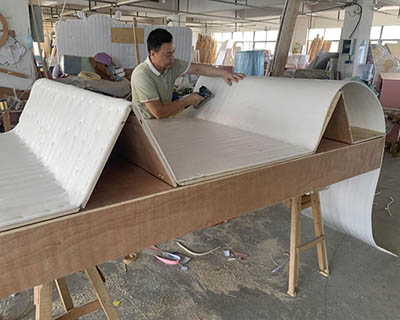
If you are planning to source indoor playground equipment from China, you are not alone. China is home to hundreds of manufacturers serving the global family entertainment center (FEC) market. The challenge is not finding a supplier—it is finding the right supplier.
The key to a successful sourcing decision lies in a systematic evaluation process. Rather than relying on website appearances or price alone, buyers should assess potential manufacturers across five critical dimensions: industry experience and track record, safety certifications and compliance, material quality and transparency, customization capabilities, and after-sales support.
This guide provides a practical framework for evaluating Chinese indoor playground manufacturers. Whether you are opening your first FEC or expanding an existing venue, these criteria will help you make an informed decision before you review specific equipment configurations.
Why Sourcing from China Requires Careful Evaluation
China's indoor playground equipment industry has matured significantly over the past decade. The country now produces a wide range of products—from basic soft play structures to complex, themed indoor playgrounds with integrated technology. However, the quality and reliability of manufacturers vary considerably.
Some factories have decades of experience, export to multiple continents, and maintain rigorous quality control systems. Others operate with minimal quality assurance, using substandard materials that may compromise safety and durability. For commercial buyers, the cost of choosing the wrong supplier extends beyond the purchase price—it includes installation delays, maintenance issues, safety liabilities, and lost revenue from equipment downtime.
A structured evaluation process helps separate reliable manufacturers from those that may cut corners in ways that are not immediately visible.
Key Criteria for Evaluating Chinese Indoor Playground Manufacturers
1. Industry Experience and Track Record
Experience matters in commercial playground manufacturing. Manufacturers with longer track records have typically refined their production processes, established reliable supply chains, and accumulated practical knowledge about what works in different markets.
When evaluating a manufacturer, consider:
- Years in business: How long has the company been manufacturing indoor playground equipment?
- Export experience: Which countries has the company exported to? Does it have experience with the safety standards required in your target market?
- Project portfolio: How many projects has the company completed? Look for evidence of similar projects in terms of scale, complexity, and application.
For example, established manufacturers often highlight their track record: over 13 years of industry experience, exports to more than 50 countries, and completion of over 1,000 projects worldwide. These indicators suggest operational stability and international capability.
To verify a manufacturer's track record, learn more about the company's background and project portfolio before proceeding to the next evaluation stage.
2. Safety Certifications and Regulatory Compliance
Safety is non-negotiable in commercial children's play equipment. Reputable manufacturers should be able to demonstrate compliance with the safety standards applicable in your region.
Common international standards include:
| Standard | Region | Application |
|---|---|---|
| ASTM | United States | Indoor playground equipment safety |
| EN | Europe | Playground equipment safety standards |
| CSA | Canada | Children's play equipment |
| AS | Australia | Playground equipment |
| NZS | New Zealand | Playground equipment |
| ISO | International | Quality management systems |
A manufacturer that has achieved these certifications has undergone third-party testing and verification. Buyers should request certification documentation and verify that the standards are current and relevant to their installation location. Some manufacturers clearly state their compliance: equipment has passed ASTM in the USA, EN in Europe, CSA in Canada, AS in Australia, and NZS in New Zealand.
For detailed information about safety standards and compliance documentation, request the relevant certificates directly from the manufacturer.
3. Material Quality and Transparency
The materials used in indoor playground equipment directly affect safety, durability, and maintenance requirements. Quality manufacturers are transparent about their material specifications and welcome scrutiny.
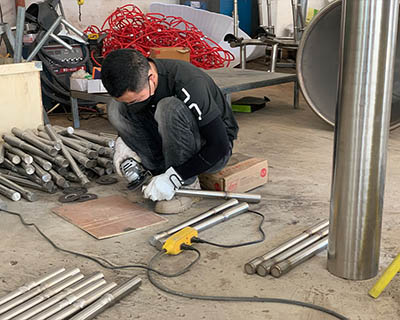
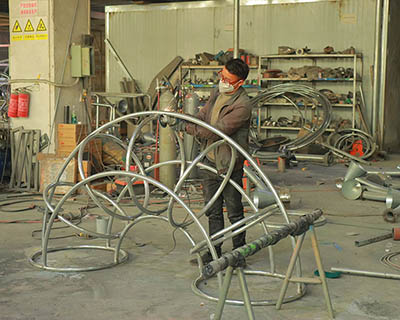
Key material considerations include:
Steel frame and structural components:
- Hot-dip galvanized steel provides superior rust resistance compared to cheaper electroplating methods
- Steel thickness should be specified—higher gauge steel offers greater structural integrity
- High-strength steel platforms eliminate the risk of rotting and collapse associated with long-term use
Plastic components:
- Commercial-grade plastics such as LLDPE offer better impact resistance and durability
- UV-stabilized materials prevent fading and degradation
Soft play and padding:
- Commercial-grade foam maintains its shape and protective properties longer than lower-density alternatives
- Vinyl covers should be easy to clean and resistant to tearing
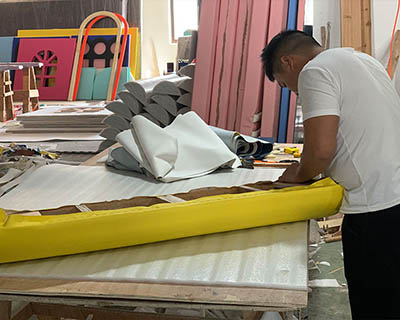
Buyers should ask for material specifications in writing and, where possible, request samples or visit the factory for on-site inspection. Some manufacturers demonstrate confidence in their quality by clearly indicating steel thickness in contracts and welcoming on-site inspections.
Buyers can review material specifications and quality assurance processes to better understand what constitutes commercial-grade quality.
4. Customization Capabilities
Most commercial indoor playground projects require some level of customization—whether to fit an irregular space, achieve a specific theme, or meet a particular budget. A manufacturer's ability to handle customization is therefore an important evaluation criterion.
Questions to ask:
- Does the manufacturer offer 3D design services to visualize the space before production?
- Can the company translate conceptual ideas into practical designs?
- What is the process for design revisions and approvals?
- How does customization affect lead times and pricing?
Established manufacturers typically offer a structured collaboration process: CAD drawing, custom design, quotation, contract signing, production, shipment, installation, and operation. This structured approach indicates experience managing custom projects.
To understand how customization works in practice, explore the custom design and project planning process offered by established manufacturers.
5. After-Sales Support and Installation Assistance
The relationship with a manufacturer should not end when the equipment ships. After-sales support is critical for successful installation and long-term operation.
Key support services to look for:
- Overseas installation assistance: Experienced engineers who can travel to the installation site and speak the local language
- DIY installation support: Detailed videos and drawings for self-installation, backed by 24-hour after-sales service
- Warranty and maintenance: Lifetime support with maintenance and replacement services during the warranty period
- Safety inspections: Compliance checks against ASTM and EN safety standards
A manufacturer that offers comprehensive after-sales support demonstrates confidence in its products and commitment to customer satisfaction.
Before making a final decision, contact the manufacturer directly to discuss support and warranty terms and ensure they align with your project requirements.
Red Flags to Watch For
When evaluating potential suppliers, be alert to these warning signs:
- Vague or missing material specifications: If a manufacturer cannot or will not specify steel thickness, plastic type, or galvanization method, proceed with caution.
- Unwillingness to provide certification documentation: Legitimate manufacturers should be able to produce current safety certifications.
- Prices that seem too good to be true: Extremely low prices often indicate cost-cutting in materials or labor that may compromise safety and durability.
- No verifiable project references: A manufacturer should be able to provide examples of completed projects, preferably with photos and client details.
- Poor communication: Responsive, clear communication during the evaluation phase often indicates how the manufacturer will handle issues during production and after delivery.
One of the best ways to verify a manufacturer's capabilities is to view completed projects and customer references that demonstrate their real-world performance.
Checklist: Evaluating an Indoor Playground Manufacturer
Use this checklist when assessing potential suppliers:
- How many years has the company been in the indoor playground equipment business?
- How many countries does the company export to? Has it exported to my target region?
- Can the company provide certification documentation for ASTM, EN, CSA, AS, or other relevant standards?
- What materials are used for the frame?
- What materials are used for plastic components and soft play elements?
- Does the company offer 3D design and customization services?
- What is the typical lead time from design approval to shipment?
- What installation support is provided?
- What warranty and after-sales support are included?
- Can the company provide references or case studies from similar projects?
Frequently Asked Questions
1. Is it safe to source indoor playground equipment from China?
Yes, provided you select a reputable manufacturer that complies with international safety standards. Many Chinese manufacturers export to markets with strict safety requirements and maintain certifications such as ASTM, EN, CSA, and AS. The key is to verify certifications and material specifications before purchasing.
2. How do I verify a manufacturer's safety certifications?
Request copies of current certification documents. Reputable manufacturers will provide these readily. You can also check with the certifying bodies or ask for the certificate numbers to verify independently. Be cautious of manufacturers that are vague or evasive about their certifications.
3. What is the typical lifespan of commercial indoor playground equipment?
Commercial indoor playground equipment typically lasts between 6 and 12 years, depending on the quality of materials, frequency of use, and level of maintenance. Higher-quality materials and regular inspections can extend this lifespan significantly.
4. How much does it cost to import indoor playground equipment from China?
The cost varies widely based on the size of the playground, complexity of the design, customization level, and shipping costs. Budgets can range from under USD 40,000 for small soft-play setups to over USD 500,000 for large, multi-zone FECs. Accurate cost estimation requires a detailed project scope and equipment specification.
5. Can Chinese manufacturers customize equipment for irregular spaces?
Yes. Most established Chinese manufacturers offer custom design services to maximize usable space regardless of layout irregularities. The process typically involves CAD drawings and 3D renderings during the design phase.
6. What should I do if equipment arrives damaged or with missing parts?
A reputable manufacturer should have a clear process for handling shipping damage or missing components. This typically involves documenting the issue with photos, filing a claim with the shipping carrier, and coordinating with the manufacturer for replacement parts. Review the warranty and after-sales support terms before purchasing.
Conclusion
Choosing the right indoor playground manufacturer in China is one of the most important decisions you will make for your commercial project. A systematic evaluation based on industry experience, safety certifications, material quality, customization capabilities, and after-sales support will help you identify reliable partners and avoid costly mistakes.
The Chinese manufacturing landscape offers a wide range of options—from basic equipment suppliers to full-service partners with decades of experience and global export capability. The most successful projects are those where buyers invest time in due diligence before making a commitment.
For those ready to begin the selection process, review available equipment configurations and discuss your project requirements with manufacturers who demonstrate transparency, experience, and a commitment to quality.